
Case studies
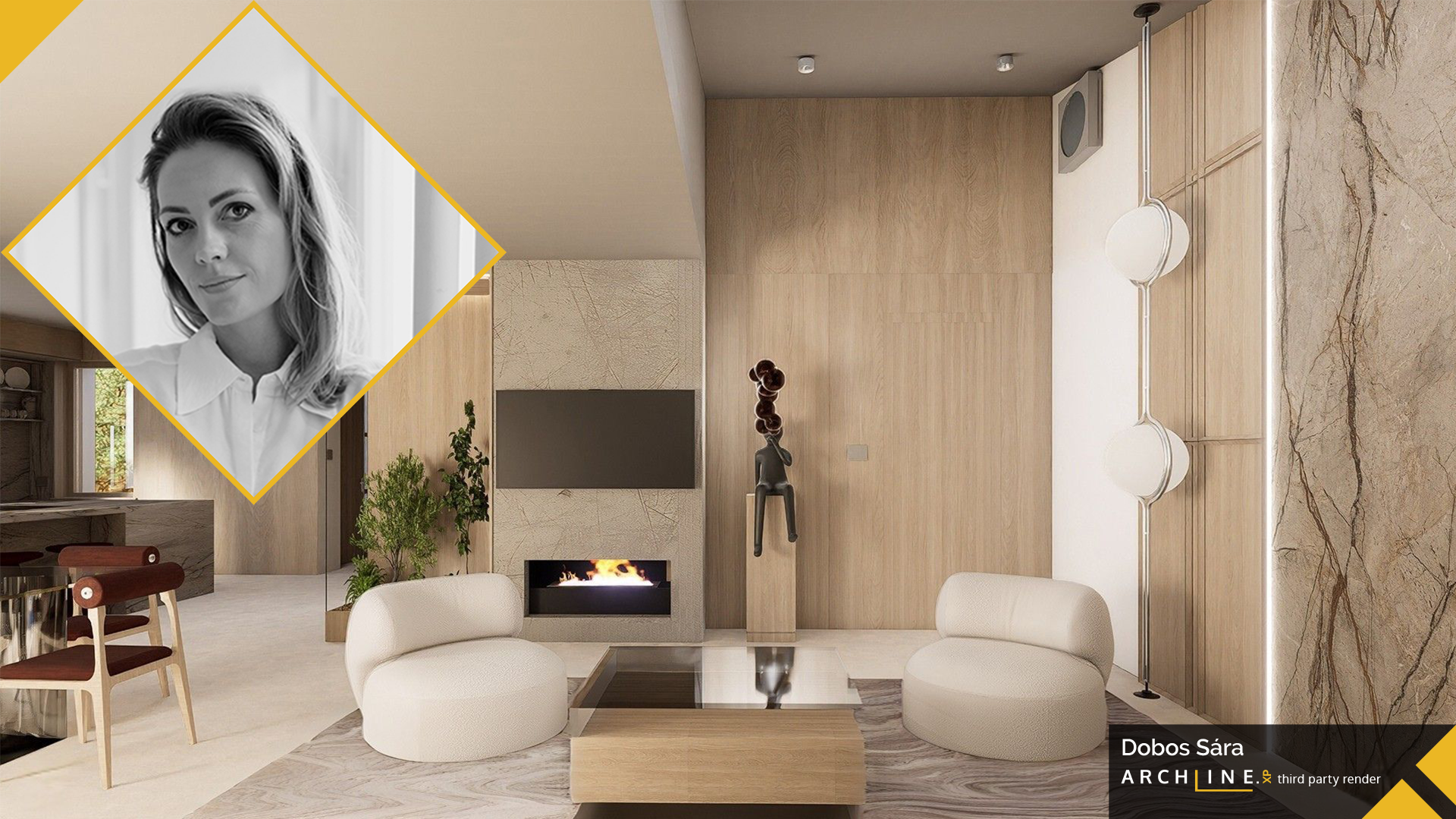
A space that lives together with the family
Designer: Sára Dobos
Sára Dobos received a Special Sponsor Award in the Emerging Designer category at the Interior Designer of the Year competition organized by LOSZ. Congratulations on the outstanding professional project!
Introduction
I believe that every space has its own aura: it connects to the person who inhabits it. That is why I value those moments that quietly influence us. A well-designed space is one of these moments: a personal story, a reflection, sometimes even a mirror of our identity. The environment surrounding us is an active part of our lives: just as we shape it, it also shapes our everyday experiences.
I am inspired by the harmony of minimalism and nature; my goal is to create a refined quality where the natural balance of aesthetics, ergonomics, and functionality supports the realization of human-centered design and the genuine connection between people, space, and atmosphere.
In my work, I strive to create spaces where functionality and aesthetics form a balanced unity. I do not seek quality design in excess, but rather in the subtle gestures of restraint, carefully selected materials, and harmonious, human-scale solutions. Ultimately, the true measure of design is always the human being: the way we see, feel, and exist within a space.
Project description:
Structured modernity – The composition of a contemporary home
The design task involved the interior redesign of the ground and upper floors of a three-story family house located in the greater Budapest area. The project was carried out under strict structural and mechanical constraints: the load-bearing structures, main walls, and wet areas were fixed, meaning that the true field of design was not transformation, but the conscious reinterpretation of the existing structure.
The starting point of the concept was a simple yet complex question: how can an interior space be created where order does not restrict, but instead provides a framework for a dynamic, contemporary lifestyle?
The clients’ blended family structure, their frequent hosting of guests, and their creative, inspiration-driven daily life required an environment that would not merely react to impulses, but consciously support the rhythm of life through thoughtful spatial organization. The design response therefore became a composed yet human-scale spatial structure in which functions are arranged into a clear hierarchy: communal areas are open and welcoming, private zones are protected, while transitional spaces are not leftover surfaces but tools for maintaining spatial order.
The aim was not to showcase overstated luxury, but to establish an internal order in which there is nothing more than what the family genuinely needs for their everyday life. In this sense, luxury becomes perceptible not through scale, but through the quality and consistency of the design.
For this reason, the use of materials and formal language is intentionally restrained yet distinctive. The dominant presence of wood, stone, and natural materials, the partially raw surfaces, and the combination of soft curves with disciplined geometry together create a visual language that conveys stability, timelessness, and a human scale. Colors do not appear merely as decoration: deeper tones establish focal points, while neutral surfaces create a calm yet dynamic rhythm.
The integration of technology was also part of the concept. Existing mechanical systems appear not as limiting factors, but as background structures supporting the purity of the space. In the bathrooms, the “well-being” approach manifests not through spectacle, but through proportions, material choices, and user comfort. Beyond functional service, these spaces offer opportunities for regeneration and retreat.
Throughout the design process, the project was guided by an approach reflecting one of the key questions of contemporary architecture: how the honesty of modernism can be reinterpreted within the technical and cultural context of the 21st century. In this project, honesty is not an aesthetic statement, but a design attitude. The space does not attempt to appear more than what it is; its operation is clear and its structure transparent. The design response therefore became a consciously composed, yet not rigid, system of spatial organization. Openness here does not mean the complete dissolution of boundaries, but their sensitive handling — a kind of freedom capable of balancing the structured nature of the space.
This coexistence of freedom and order perhaps best expresses the lifestyle ideal of our time: the simultaneous acceptance of possibilities and limitations. This project is not a snapshot of a single life situation, but a flexible yet structured framework capable of adapting to the changing rhythm of the family. Here, space is not scenery, but the conscious framework of everyday life.
Finally, I would like to thank ARCHLine for the opportunity to use the 2025 version of the software for the completion of this competition project. I believe — especially as an emerging designer — that this was not only a generous gesture on the part of Cadline Ltd., but also incredible support. I see it as a valuable act of community building and encouragement, something the Hungarian design world greatly needs.
Renderings:
Sára Dobos
Interior designer
Contact:
e-mail: This email address is being protected from spambots. You need JavaScript enabled to view it.
Phone: +36 30 619 54 81
Instagram: https://www.instagram.com/open.concept.interior
Facebook: Open Concept Interior
Website: www.openconceptinterior.com