
Professional articles | Blog | ARCHLine.XP

The Journey to a Successful ARCHLine.XP Reseller in Ecuador
Interview with Stalin Oleas
Interviewer: Hello everyone! The goal of today’s interview is to present the journey of a successful ARCHLine.XP partner. We won't talk about numbers; we’ll dive into specific strategies, initial investments, and the lessons learned that can help our entire reseller network grow. Stalin, thank you for accepting this invitation and for sharing your experiences with such transparency. I started working with Stalin two years ago in a country facing significant economic challenges: Ecuador. We started from scratch, and while I supported him as much as possible, the ultimate responsibility lies with the reseller—the one who truly knows the local environment. Let’s dive in!
Introduction
Interviewer: Stalin, please tell us a few words about yourself and your company. What is your professional background, how many people are in your team, and do you have a dedicated technical expert for ARCHLine.XP? Also, could you describe the current economic situation in Ecuador, particularly regarding the construction industry?
Stalin Oleas:
Thank you for having me. My journey in the CAD software industry began with Autodesk, where I served as Product Manager for the main wholesaler in Ecuador for eight years. Although I am an Electronic and Telecommunications Engineer by profession, since my early days at IBM Ecuador, I’ve always been passionate about merging commercial strategy with deep technical knowledge. I believe that to sell a solution effectively, you must truly understand how a technician uses the tools in the field.
In 2010, I decided to start my own business, focusing on the distribution of ZWCAD and specialized plugins for topography, civil engineering, GIS, and MEP. Around ten years ago, as interest in BIM began to rise, we explored several brands, but we didn't find a solution robust enough to truly challenge Autodesk’s dominance—until 2023, when we discovered ARCHLine.XP. After a deep dive and technical evaluation, we knew it was the right fit. Today, our team includes Eng. Erika Vega, our Solutions Specialist, who is incredibly enthusiastic about testing and implementing new applications. We’ve also leveraged AI significantly to create high-quality content and better serve our clients.
Regarding the context in Ecuador, we are currently navigating security challenges due to regional geopolitical factors. However, there is a silver lining: non-oil exports are growing, and public entities—driven by government mandates and the urgent need for cybersecurity—are moving away from irregular software usage. This shift has opened significant doors. While Autodesk’s positioning remains very strong, we are steadily gaining ground, backed by the confidence that we are offering an excellent, high-performance product.
The Beginning: Why ARCHLine.XP?
Interviewer: Where did you first encounter ARCHLine.XP? What was the specific point when you decided, "Yes, I want to become a reseller for this product"? What were your very first steps after we signed the contract?
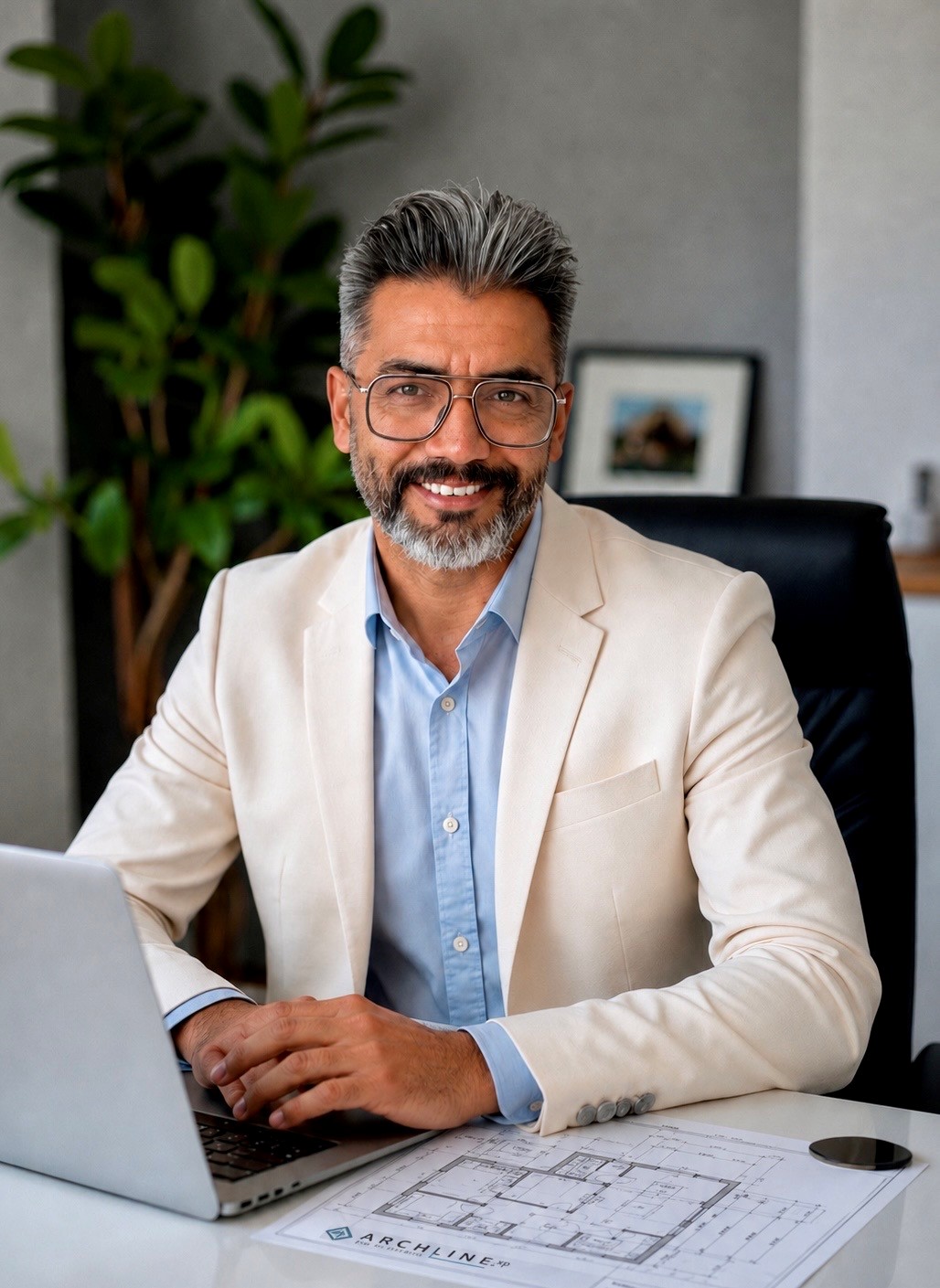
Stalin Oleas:
The first time I heard about ARCHLine.XP was through the ZWSoft partner network. As long-time distributors of ZWCAD, it was frequently recommended to us as the premier BIM alternative for users who needed more than just traditional CAD.
The turning point came in 2023 when we began rigorous testing. There were three technical 'deal-breakers' that convinced me this was the right solution for the Ecuadorian market:
Seamless Interoperability: The ability to import Revit (.rvt) files and the native interaction with ZWCAD via DWG is vital. In a market where many firms are tied to traditional formats, ARCHLine.XP acts as a perfect bridge.
User Experience: The interface felt familiar to anyone coming from other BIM environments, which significantly flattens the learning curve for our clients.
Commercial Agility: Unlike other developers with rigid requirements, the team at Cadline provided us with information and support almost instantly. They understood that in Ecuador, project timelines can be long and require a partner who is flexible and supportive rather than just demanding quotas.
Once the contract was signed, our first steps were focused on localization and technical mastery. I immediately enrolled our team in deep-dive training to ensure we could provide high-level support. We also began translating marketing materials to reflect the specific needs of our local architecture and engineering community, ensuring they saw ARCHLine.XP not just as a tool, but as a competitive advantage.
Investments: Time, Money, and Learning
Interviewer: Many people only see the profit, but what happens behind the scenes? What kind of financial and educational investments did you have to make to get started? How did you master the software to a level where you could confidently represent it? Did you have any prior BIM studies or experience?
Stalin Oleas:
In Ecuador, selling software is a complex challenge, but we see that complexity as a strategic barrier to entry that protects us. It’s not just about the initial investment; it’s about the time required to achieve ROI and, more importantly, building market trust, which takes years. We have been in this business for over 20 years, and that longevity has granted us a reputation and a level of trust that new players simply cannot buy.
Regarding the learning curve, thanks to our extensive background in CAD and engineering solutions, the transition wasn't overly steep. We mastered ARCHLine.XP through a combination of rigorous online training, direct support from the developers via email, and constant technical testing.
However, the real investment isn't just a single invoice; it's the human capital. Our lead engineer has dedicated countless hours to mastering the technical nuances of the software. On the commercial side, the investment lies in 'localization': adapting the global message to the Ecuadorian reality, traveling to different cities to meet clients face-to-face, and maintaining a consistent presence on social media.
People often think having a high-quality product is enough. In reality, the quality of the software is just one piece of the puzzle. The true investment is the endurance and the professional resources we deploy every day to ensure our clients feel supported long after the sale is closed.
Customer Acquisition and Database Building
Interviewer: This is the part that interests our audience the most. You signed the contract, received the materials—then what? Did you have an existing contact list, or did you build it from zero? How did you generate leads: phone calls, newsletters, or cold calling? How important was it to visit architectural firms in person?
Stalin Oleas:
We certainly didn't start from scratch; we had a solid database of loyal clients to whom we could present our 'new toy.' However, we quickly faced a reality: Autodesk’s positioning is incredibly dominant. Often, technical professionals discard new options before even testing them—not because of the software’s quality, but due to lack of time, project pressure, or the simple inertia of sticking to what they already know.
To overcome this, our strategy has been multifaceted. We’ve visited numerous architectural firms and public institutions, conducting both in-person and online presentations. In the public sector, we found a significant 'pain point' we could solve: the need for a competitive BIM solution with robust network licensing capabilities. This specific advantage—offering high functionality at a price point that makes sense for large-scale deployments—has been the key to closing those initial deals.
Now, our focus is on retention and intensive use. We are heavily investing in specialized training and support to ensure that once a client buys ARCHLine.XP, they integrate it deeply into their workflow. Growth comes from success stories, not just sales. Additionally, we are currently running telemarketing campaigns to build a fresh, BIM-specific database, ensuring a steady pipeline of prospects who are ready to make the jump to a more efficient BIM ecosystem.

Erika Vega - Senior tech support
Marketing and Digital Strategy
Interviewer: Let's talk about visibility. Did you use social media? Did you rely on paid ads, or was it mostly organic growth? Did you create your own professional content or host webinars? Which marketing channel proved to be the most effective in the Ecuadorian market?
Stalin Oleas:
To be honest, our use of social media has been conservative so far. While we recognize its potential, it hasn’t been the primary driver of our growth yet. We produce our own professional content, but we are now planning to increase the frequency and visibility of our webinars through social platforms as part of a more aggressive digital strategy.
However, in the Ecuadorian market, we’ve found that high-touch interaction is still king. The most effective channel remains the telephone call. This is why our telemarketing strategy is so critical—it allows us to cut through the digital noise and establish a direct technical dialogue with decision-makers. While email marketing is excellent for maintaining brand presence and keeping our solutions 'top of mind',' it functions more as a support tool than a primary generator of real opportunities.
The real conversion happens when we pick up the phone, understand the client's specific engineering challenges, and then invite them to a targeted webinar or a personalized demo. Moving forward, our goal is to bridge the gap: using social media to build authority and then closing that circle through the personalized outreach that our clients in Ecuador still value most.
Difficulties and Turning Points
Interviewer: The road to success is rarely a straight line. Besides the general economic situation, what technical or trust-related difficulties did you face? Was there ever a point where you wanted to give up? What kept you going?
Stalin Oleas:
I believe the primary hurdle has always been reaching the right decision-makers to present our solutions. It’s a challenge we’ve faced daily for years, so we’ve become quite comfortable navigating it. Building trust in our technical expertise took time, but we overcame that by addressing every prospect’s doubt directly, backed by our own technical expertise and the unwavering support from Cadline—both on the commercial and technical fronts.
The option of giving up simply doesn't exist for us. Selling software in Ecuador has always been a marathon, a race of endurance, even when you are representing the market leader. You just have to keep doing things right: approaching new companies, refining your call scripts, and testing new angles in your emails.
Interestingly, the landscape has changed significantly. Twenty years ago, you literally had to go and knock on physical doors. Today, with access to partner portals, detailed websites, and AI, we have a wealth of information at our fingertips to empower our pitch. Ultimately, I don't believe you need motivation to start; you need to start doing something, and the motivation follows naturally from that action.
Support and Collaboration
Interviewer: How would you evaluate the support you received from us (the software developer/partner manager)? Which type of support was the most useful, and where do you think we could improve to help your work even more? What additional resources would you need in the future?
Stalin Oleas:
I am very pleased with the commercial and technical support we have received. Katalin, our permanent point of contact, is consistently attentive to our needs, ensuring our daily operations run smoothly. I feel we are very well-supported on the technical side.
A significant improvement would be receiving guidance on lead generation through social media, specifically LinkedIn and Google Ads. Additionally, having access to marketing resources or development funds would be invaluable to effectively implement these digital strategies and expand our reach.
Support and Collaboration

Interviewer: To wrap things up, could you share a specific success story? Is there a particular client project you are especially proud of? Finally, what is your message to other resellers who are just starting out or facing similar challenges?
Stalin Oleas:
The case of the municipality of Riobamba was particularly interesting. Their planning department exclusively used CAD, with several users relying on CivilCAD, a civil engineering tool based on ZWCAD.
We visited them and showed them how implementing BIM in their projects could generate enormous internal benefits, such as significant time savings, higher-quality results, data reuse, seamless collaboration, and much more accurate calculations. Ultimately, they decided to acquire ARCHLine.XP Pro, which represented a very important milestone for us. Of course, the municipality still has some areas where using a BIM tool would be beneficial, but they continue to work solely with CAD; our challenge is to ensure that the excellent ARCHLine.XP user experience inspires additional departments and users to adopt the software as well.
Now, our goal is to strengthen users' proficiency with the software. We are considering organizing a design competition to keep them motivated. I believe Cadline has extensive experience in this area, and their support would be crucial in helping the client discover new reasons to master ARCHLine.XP, showing them how this learning curve translates into tangible benefits for their daily work.
Interviewer: Stalin, thank you so much for this inspiring conversation and for your honesty. I am certain your experiences will be incredibly valuable to our other partners worldwide!